March 2012 – Texas School District Opts for Three New Domes
FOR IMMEDIATE RELEASE
FOR IMMEDIATE RELEASE
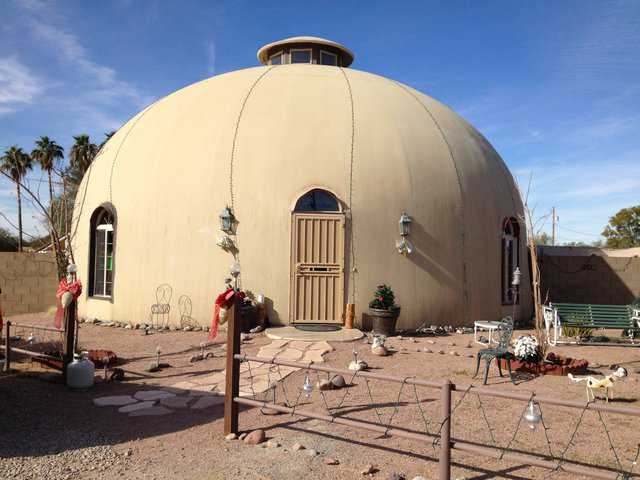
Named for what? Yorkshire Terriers – the playful, frisky, cute pups Glenna Crockett raises in her Monolithic Dome home in Mesa, Arizona! “But that’s okay,” Glenna said. “It’s actually very fitting because my Yorkies helped me pay for my dome.” Built in 2007, that dome has a diameter of 42 feet, a height of 25 feet, a living area of 2067 square feet, and three levels topped by a cupola.
On Tuesday, February 28, David South and Nanette South Clark, his daughter, met with a group in Branson, Missouri, interested in a FEMA grant for a Monolithic Dome tornado shelter. Once the meetings ended, David and Nan immediately started back to Texas. That was fortunate because a tornado hit the area that night!
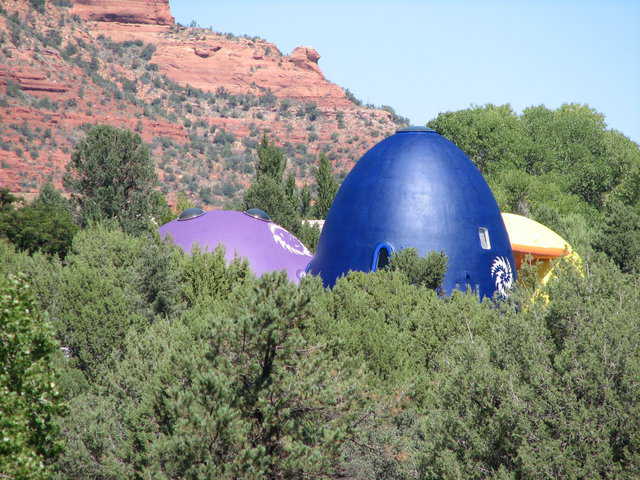
The Arizona Department of Transportation says that State Highway 179, leading into Sedona, “carries millions of tourists each year through one of the most pristine and unique areas of the world.” And Xanadu, the home of Nina Joy and Bracken Cherry and their three daughters, is one point of interest those tourists are bound to see.
School districts in tornado- and hurricane-prone areas of the United States have discovered the benefits of building Monolithic Domes to combat the fury of Mother Nature. Not only are the dome school structures energy efficient, they also can double as community disaster shelters.
Because of a request by a lady who wanted permanent flower beds that people confined in wheelchairs could garden, Monolithic developed a new way of making attractive, practical flower beds, using thin concrete and a material we’ve recently discovered and have been working with: basalt rebar. That led to a new way of making tough, long-lasting but good-looking fences. That process also uses spray-on concrete and basalt rebar. Learn all about both items in this delightful video, narrated by President David South.
I am often amazed by a community’s initial response for permission to build affordable, clean, safe, low-maintenance, long-lasting housing.
The American Institute of Human Relations and Aging (AIHRA) is a non-profit organization aimed at raising awareness of the emotional, physical and spiritual aspects of daily life in old age. One of the institute’s goals is to develop cognitive and social programs for the elderly with various interests and capabilities.
Another big milestone is in store for the St. Mary and St. Mercurius Coptic Orthodox Church in New Jersey. It’s the week church officials go before the local zoning board for the fourth time to seek approval for a new Monolithic Dome youth center.
Keith Wortman’s Monolithic Dome home in Fairplay, Colorado has made a lot of headlines over the years. The Denver Post, the Colorado Springs Gazette and even USA Today have featured the home, which has been christened Bristlecone Dome. In 2010, the home received so much publicity before the annual dome home tour that more than 700 people turned out to see the unusual property.
Bobzio.com is a website where travelers can find vacation rentals or home exchanges. It recently started publicizing homes that have green building designs and construction techniques. Not surprisingly, a Monolithic Dome home made the list.
An Oklahoma school district is hoping to receive a grant from the Federal Emergency Management Agency to supplement a $1.7 proposed bond issue needed to fund new construction. Hulbert Public Schools in Hubert would use the federal money to finance a new Monolithic Dome elementary school and cafeteria that would double as community disaster shelters.
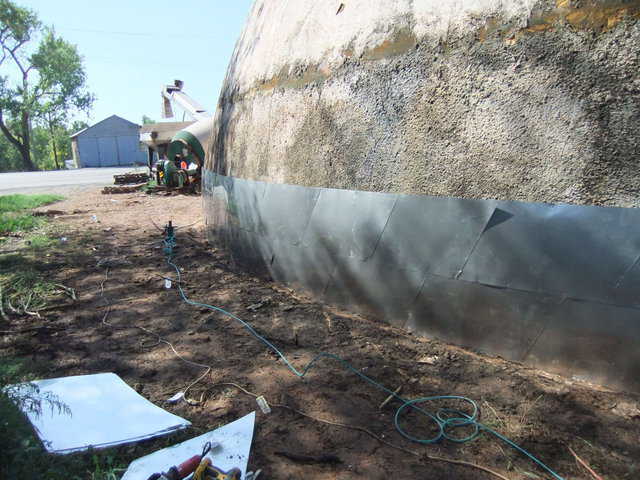
Knowing that a Monolithic Dome would make an ideal fertilizer storage, in 1978 I sent information to a fertilizer magazine. They wrote an article, featuring the Monolithic Dome as a new product, and I received a call from Bill Matthews in Chandler, Oklahoma. Bill wanted a fertilizer storage dome on a site just off America’s famous U.S. 66.
Because of their disaster-resistant qualities, Monolithic Domes are ideal for storing critical data and other essential records that must be protected in case of a tornado or hurricane. That’s why American Business Continuity Domes (ABC Domes) has dedicated its business to building disaster-resistant Monolithic Dome data storage facilities.
Are you looking for a home that can stand up to the strongest of winds and the most devastating of earthquakes? You’ve come to the right place! Mother Nature Network just ranked Monolithic Domes among the top five of the world’s most indestructible homes.
American Free Press (AFP) bills itself as a no-nonsense, uncensored, independent weekly source for important news about the pressing issues facing our nation and the world today. As such, its staff writers take the time to meet the people and explore the ideas that point towards a brighter future. That’s according to Mark Anderson, who made a recent road stop at the Monolithic Dome Institute in Texas and later wrote about our structures.
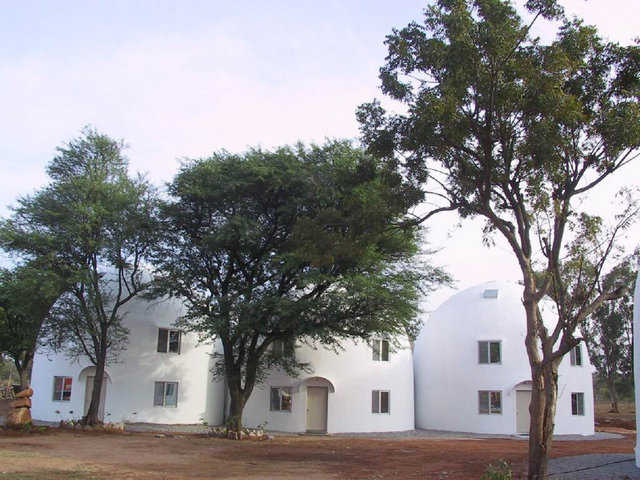
In 2000, Catalytic Software, a global enterprise, began the construction of a massive, self-sustaining complex of domes, that would include attractive, safe areas for living, working and socializing. Located on 50 acres in Hyderabad, India’s hi-tech hub, this city of 4000 domes, mostly EcoShells, is called New Oroville.

Dr. Arnold Wilson doesn’t credit human ingenuity for the invention of a dome — he credits the egg. Wilson, who retired after completing a 40-year career as Civil Engineering Professor at Brigham Young University, says, “The egg has always fascinated me. You can see that it’s the shape and structure of the shell that gives it its strength. Much the same is true for a dome, and I think we borrowed from nature when we began building domes.”
After reviewing the FEMA requirements for a structure capable of providing a safe shelter for people in areas where hurricanes and tornados represent a real danger, the Monolithic Dome, because of its very nature, heads the list for economy and strength to resist extreme loads.
There is no such thing as a free lunch, but the Monolithic Dome comes close. The original cost of a Monolithic Dome is generally less than that of a similar- size conventional building. Often it is much less. Then there is cost recovery. Generally, over a period of twenty years, savings in energy costs will equal the full cost of a Monolithic Dome facility. So, in effect, it becomes free.
A home comes in two parts; the first part is the investment. With the investment comes its value as a family domicile, a place of refuge (if it is strong enough to be a refuge), and a place for the family to gather, work, struggle and grow together. The second part of the house is the money pit. That’s the cost of maintenance, fuel, electricity and manpower it takes to maintain and operate a house. The money pit is where you throw hard-earned cash that’s never seen again by you, the homeowner.
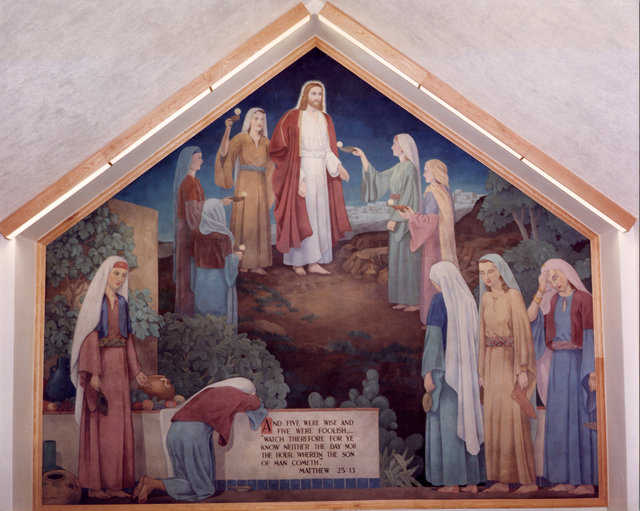
As a young man, I recall sitting in church and looking at a large painted mural at the front of our chapel. It depicted the parable of the ten virgins – five wise and five foolish. I knew that the five foolish ones had arrived without sufficient oil while the five wise ones had plenty. I also knew that when the bridegroom showed up, the smarties who came prepared were allowed to go in with him; the others were not. At the time, I didn’t understand that; it all seemed a bit cruel to me. As I matured, I realized that preparedness definitely has its rewards.
For Nanette South, David B. South’s daughter, years of study and work have culminated in a thesis titled, “A Finite Element Analysis of the Monolithic Dome.” Its ten chapters, figures and tables discuss the history of thin-shell and Monolithic Domes, shell theory, finite element analysis, comparisons of shell theories and a buckling analysis.
When Rebecca South founded Domes for the World in 2005, she was building on the vision of her father, David B. South. He envisioned the construction of safe, low-cost dome homes for the poorest people on the planet. His vision has turned into reality as EcoShell domes have been built in countries like Indonesia, Ethiopia, Mongolia, Sudan, Sri Lanka and Bolivia.

Chris Zweifel, now 41 and successfully operating ZZ Consulting, said that he always wanted to be an engineer. The question was what kind since engineering encompasses many branches. “I couldn’t make up my mind – had a hard time figuring it out,” Chris admits. Finally, about the time he began working on his bachelor’s degree, he decided on Civil Engineering.
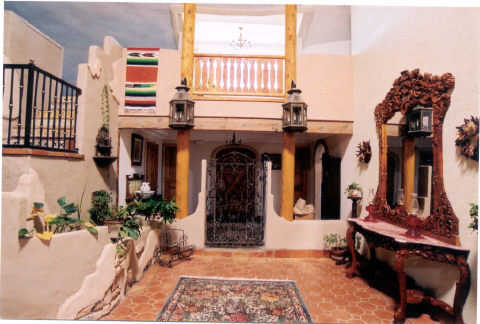
Monolithic Dome walls are not only good for our environment, safe from natural disasters and cost effective, they’re easy and fun to decorate. Yes, curved walls are finally coming into their own. What decorators used to puzzle over and dread now has them cheering and praising.
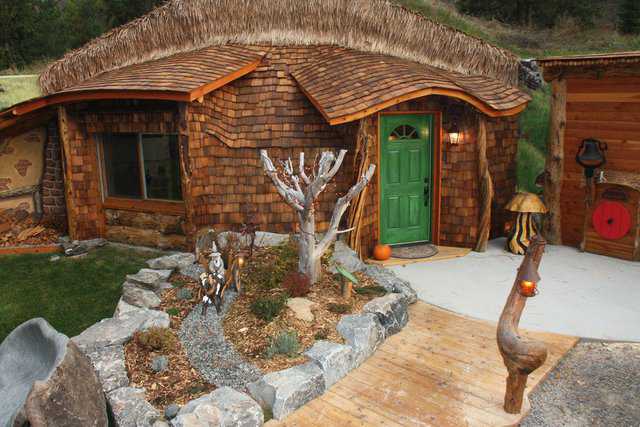
Thanksgiving is still a few days away, but we are already giving thanks that HGTV is planning to feature the beloved Hobbit House of Montana on the show Home Strange Home on Thursday, November 24 at 8 p.m. Eastern/Pacific time. Host Chris Grundy will take viewers on a tour of the “magical shire in mystical Montana.”
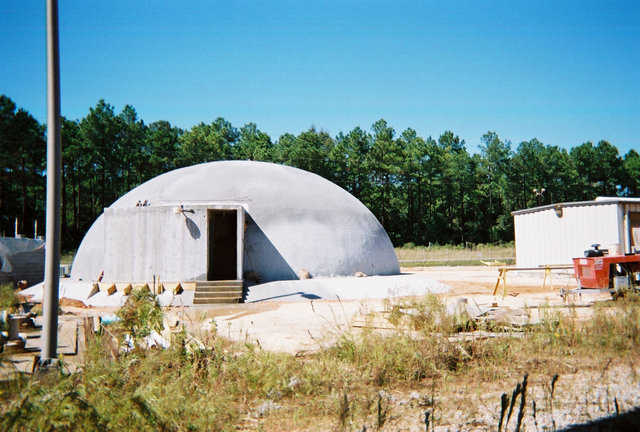
In 2004, Monolithic designed a dome for DuPont. They wanted a structure that could survive a category 5 (155+ mph winds and 18+ foot surge) hurricane, for their plant in DeLisle, Mississippi. It got tested by Hurricane Katrina.
With the end of the Mayan calendar just a little more than a year away, The Huffington Post is reporting that interest in doomsday shelters is on the rise. Those who fear the end of the world will occur on December 21, 2012 are also helping bring attention to the Monolithic Dome’s features that make it virtually indestructible.
Since early childhood I have felt total awe to the magnificence and splendor of God’s wild elements.
In 1943 Abraham Maslow published his eye-opening paper, A Theory of Human Motivation, that featured a pyramid of human needs. Shelter,, a universal human need fell into the second longest level of this pyramid. But just what was shelter for the average American in 1943 and in the years that followed? For most of us it meant having a roof over our heads – a reliable one that could protect us from the rain, wind, cold and heat. That, however, is no longer true.
St. Mary and St. Mercurius Coptic Christian Church in New Jersey may soon be the first congregation in the state to build a Monolithic Dome. The new structure, which is pending approval from the Belleville Zoning Board, would serve as a youth center.
Hooray! They’re still cheering at Monolithic. Thanks to the cooperation and work of domers scattered across America and a healthy media response, this year’s Tour was a big success. Here’s what we’re hearing from our participants:
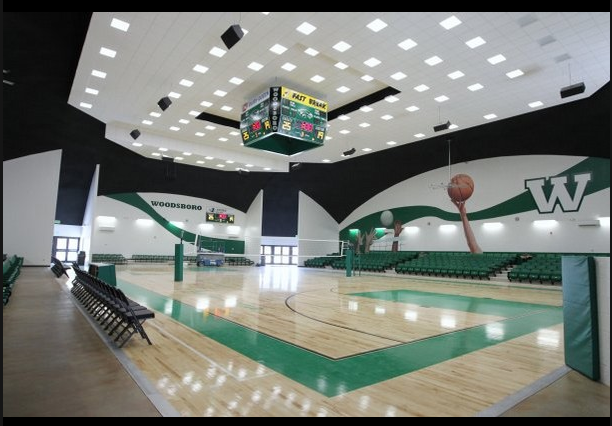
Monolithic’s David B. South traveled to South Texas recently for the dedication of the new Eagle Dome at the Woodsboro Independent School District. The new Monolithic Dome, which was financed in part by the Federal Emergency Management Agency (FEMA), is being billed as a prototype for shelters of last resort in coastal areas, according to the Corpus Christi Caller-Times.
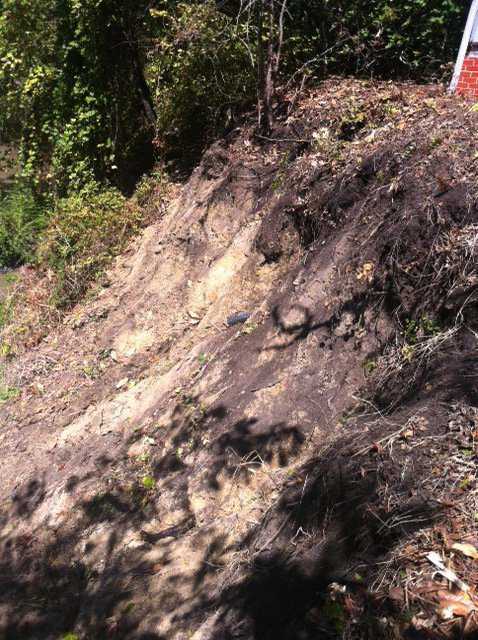
We received a call from a homeowner in Forreston, Texas. She wanted us to examine the creek bank in front of her house. The creek had seriously started to erode and her house was seriously getting closer to the creek. She was really worried about it falling into the creek if she lost a few more feet.
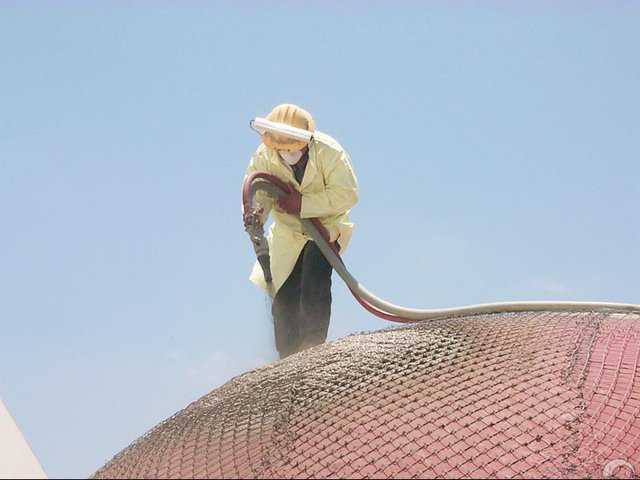
For many years Monolithic has been researching and developing protection for the Airform, the exterior fabric on a Monolithic Dome. That fabric is the weakest link of the Monolithic Dome, yet it serves two absolutely vital functions. As its name implies, the Airform forms the critical shape of the structure. That’s its primary function. But it also has an equally vital secondary function: An Airform protects the dome’s polyurethane foam insulation from sunshine and weather. But it’s made of fabric materials that, over time, the sun can slowly degrade. So to do its job, obviously the Airform needs help.
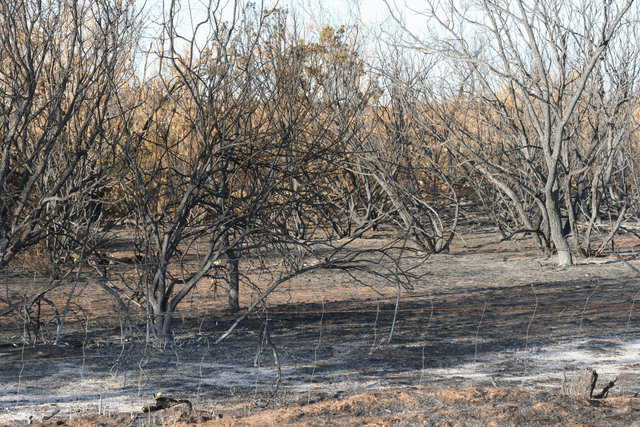
Fathers Day, 2011: On that day the Antelope Springs Ranch in Blackwell, Texas fell victim to a wildfire that blazed across the Lone Star State. This fire destroyed 100,000 acres before it was stopped.
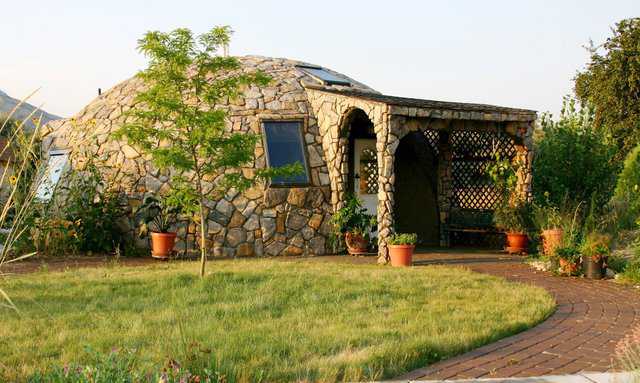
Brigham City, located in Box Elder County, Utah, population 18,000, is home to Lori Hunsaker, editor of the Box Elder News Journal and owner of a beautiful 32′ × 18′ elliptical Monolithic Dome home.
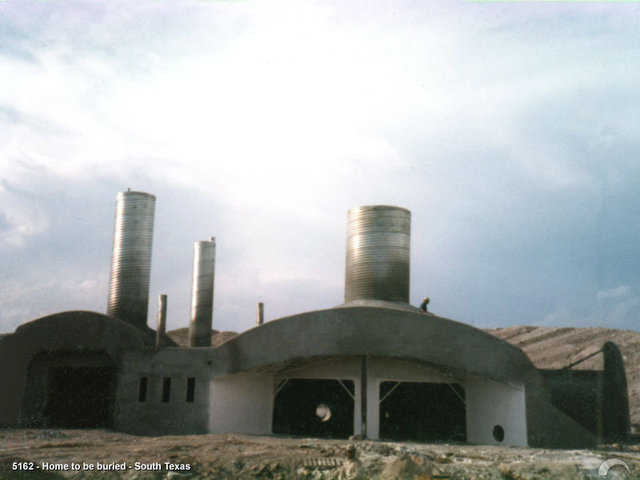
In 1986 John Ayers of Presidio County, Texas became concerned about nuclear fallout from a dropped bomb. He wanted to be safe and asked me to build an underground house for him, which we did in the late summer of that year.
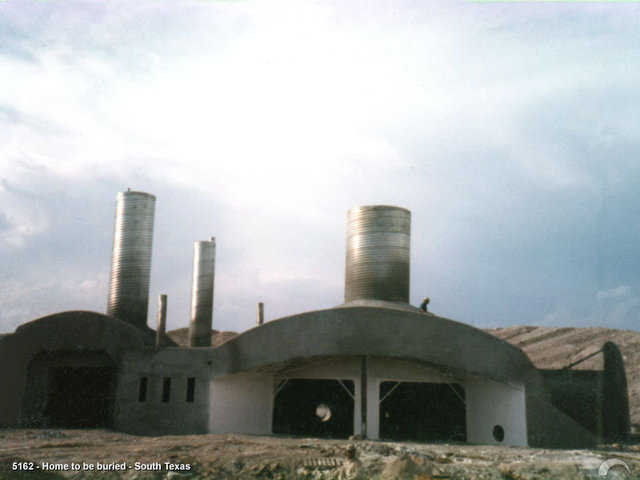
I keep hoping a day will come when we’re no longer thinking that we may need a bomb or fallout shelter. But it seems more and more likely that the need will occur before that day does.
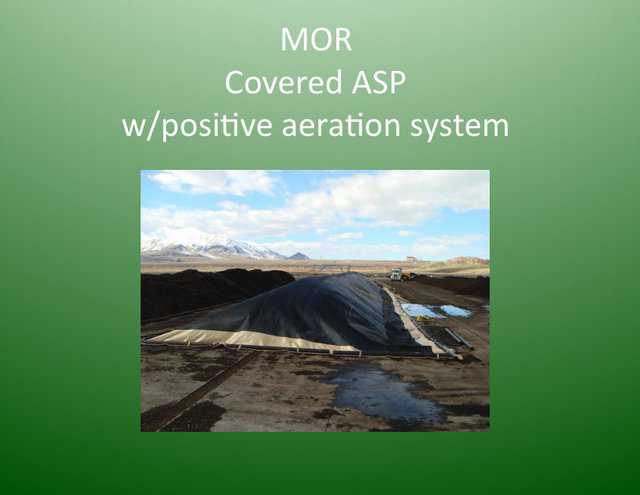
Managed Organic Recycling (MOR) has developed a new composting technology. Its called Aerated Static Pile or simply ASP.
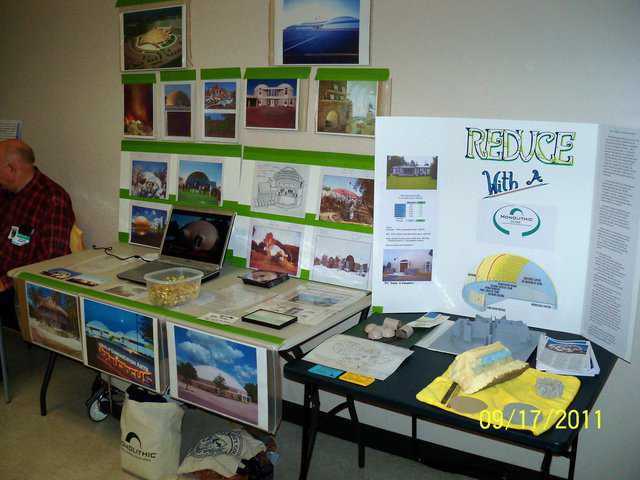
During the 2010 Annual Monolithic Dome Tour, we had more than 100 curious visitors to our dome home in Galax, Virginia. One of those visitors remembered the efficiency of our Monolithic Dome and invited us to a LandCare Grayson (County, Virginia) meeting.
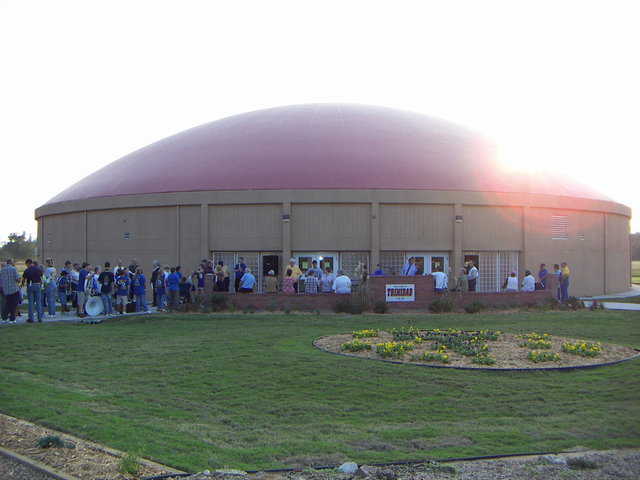
Trinidad, a Texas rural community of 1100 and school district with about 300 students, has been using its Monolithic Dome gymnasium and field house for about seven years now, since their completion in October 2004.
Doing well by doing good. That’s a motto that David B. South has lived by since he first started building Monolithic Domes back in the 1970s. Now his philanthropic efforts are being highlighted by one of the nation’s savviest young entrepreneurs.
One of our recent workshop attendees submitted a slide show that shows the construction of a Monolithic Gazebo. Monolithic Gazebos are constructed using the Ecoshell I construction method. This Monolithic structure as well as a Monolithic Grow Dome were constructed by the workshop attendees during the September 2011 Workshop.
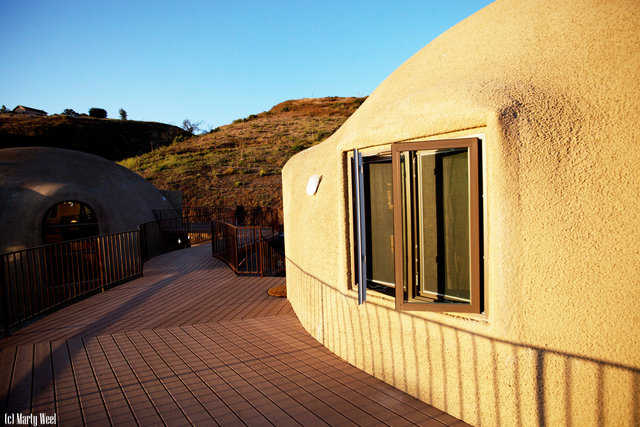
On October 21, 2007, in Santiago Canyon, a hilly, wooded area of Orange County California, an arsonist and the dry, ferocious Santa Ana winds formed a devastating alliance. Together they created and quickly spread a blaze that forced 3000 residents out of their homes. The wood house of Melody and Phil McWilliams was one that was totally destroyed. “All of a sudden, there we were with no home!” Phil said.
The wonderland that Steve and Christine Michaels have created around their Monolithic Dome home is once again making headlines. This time it’s the hometown newspaper, the Billings Gazette, that is putting the spotlight on the unusual property. As we’ve reported, the New York Times and MTV Extreme Homes have also come calling.
Time and time again, we’ve seen Monolithic Domes survive Mother’s Nature’s greatest wrath: from Category 5 hurricanes in Florida to EF5 tornadoes in the Midwest. Awareness has been growing in recent years of just how strong these building are. So strong, in fact, that the Federal Emergency Management Agency is now providing funding to schools and other public entities that build domes that double as community disaster shelters.
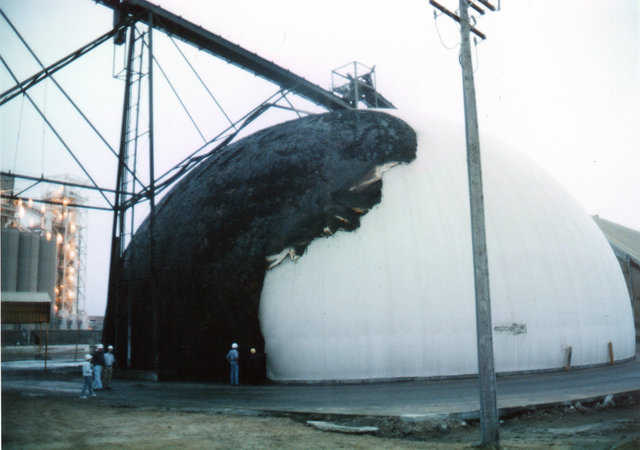
When sprayed on the interior of a building, with no covering such as shotcrete or drywall, polyurethane foam can create a dangerous fire hazard. Monolithic Domes are as close to fireproof as you can make a building with today’s technology. Yet they have urethane as a major component. Currently, urethane foam is the world’s best insulation, but let me tell you the rest of the story.
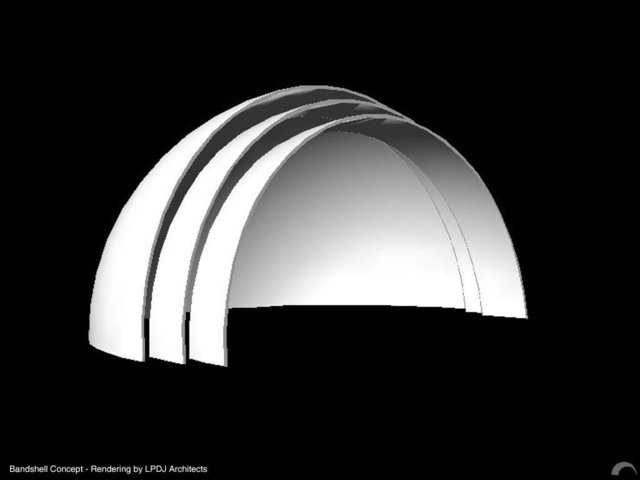
Can a quality bandshell be designed and built economically? Yes – with a Monolithic Dome as the curved form that a bandshell needs.