Payson Athletic Center

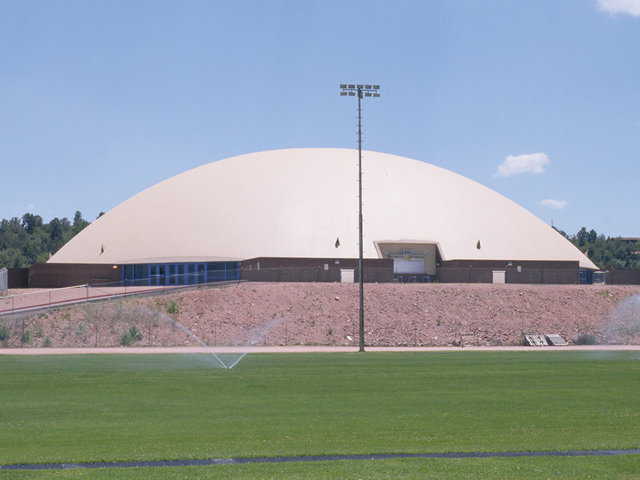
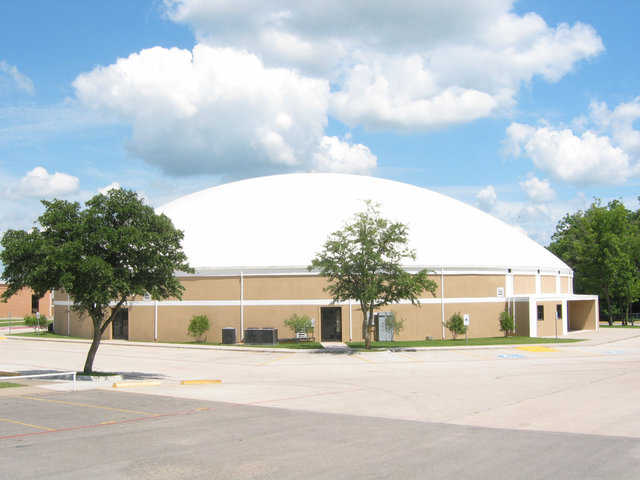
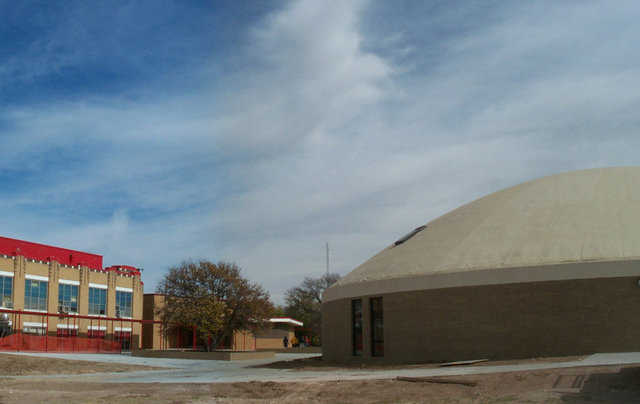
Coaches, athletes and sports fans are delighted with Payson Unified School District’s new multipurpose dome, which will be home to the district’s middle and high school basketball, volleyball and wrestling teams.

Coaches, athletes and sports fans are delighted with Payson Unified School District’s new multipurpose dome, which will be home to the district’s middle and high school basketball, volleyball and wrestling teams.

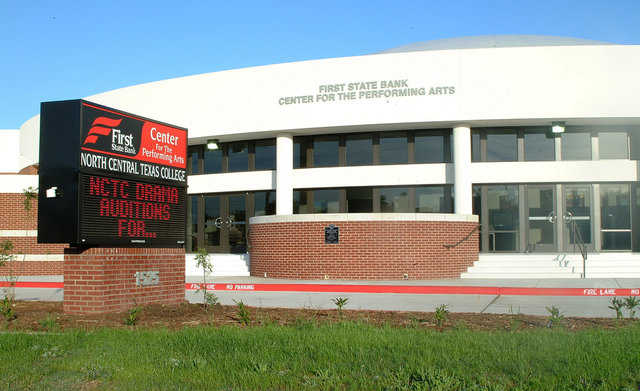
“The best experience we have ever had building anything,” said Dr. Steve Broyles, Dean of Administrative Services at NCTC (North Central Texas College) in Gainesville. He was talking about NCTC’s new Monolithic Dome Performing Arts Center at its grand opening dedication on April 8, 2005.

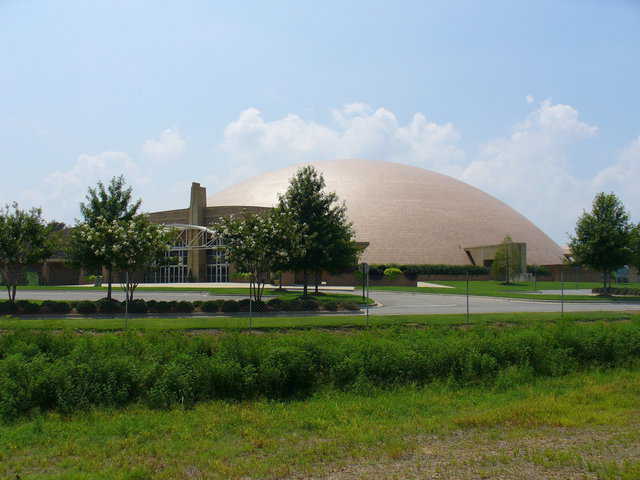
Birmingham, Alabama is home to the largest diameter Monolithic Dome church in the world. Built in 2000, Faith Chapel Christian Center measures 280-feet in diameter with a seating capacity of approximately 3,000. The dome encloses 61,575 square feet. The church was designed by Architect Rick Crandall and Dome Technology of Idaho Falls, Idaho built the dome shell.

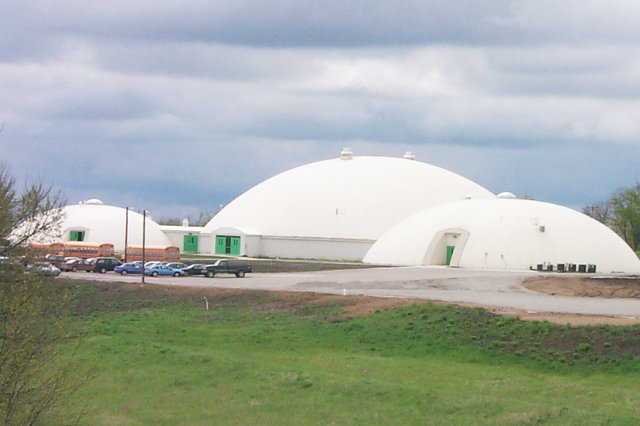
The atmosphere around Pattonsburg, Missouri virtually sings with the sounds of construction, excitement and anticipation. After five years of what School Superintendent Gene Walker described as, “more than our fair share of trials and tribulations,” this small, rural community watches the completion of its new school facility — four Monolithic Domes.

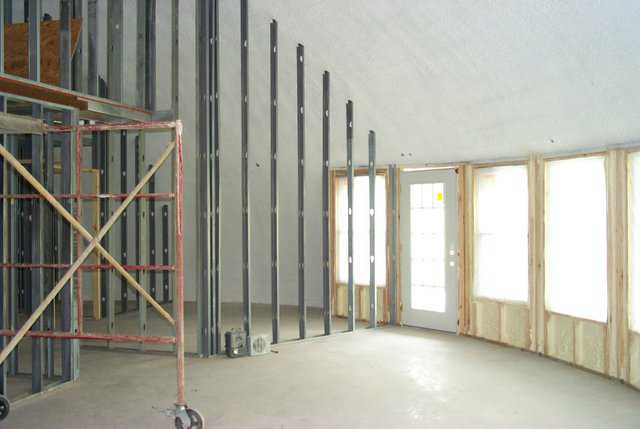
Once the Monolithic Dome shell is in place, we need to divide the interior into rooms. Our suggested method for this is to use steel studs and sheetrock. You can use wood studs but that interjects a material that is flammable and subject to termite damage. If the walls of the house are simply separators, you can use light gage steel studs and simply put them in place.
Before starting the construction of a Monolithic Dome, each of the items in this checklist must be in place.
Foundation Receives $1 Million Grant to Build Houses in Indonesia
Monolithic Dome homes, steel-reinforced, all-concrete buildings that meet Federal Emergency Management Agency’s standards for near-absolute protection from hurricanes and cost up to 50 percent less to heat and cool than traditional buildings, will be making their debut at the 2006 International Builders Show in Orlando in January.
The School of Communication Arts in Raleigh, North Carolina is unique in more ways than one. It was one of the first schools in the world to offer instruction in high-end computer animation, and its graduates have gone on to work on major motion pictures such as Star Wars and the Matrix.

The story of David B. South – a man whose foresight and determination led to the invention of the Monolithic Dome - is perfectly summarized in the title of a new book about his life: Think Round: The Story of David B. South and the Monolithic Dome as told to Freda Parker.

Compared to other types of structures, the interior temperature of a Monolithic Dome can be more easily and economically maintained. That makes it one of the best structures you can build in either very hot or very cold climates. Monolithic Domes work extremely well in either condition.
To date, of all the school bonds voted on which proposed a Monolithic Dome facility, all but one have passed. We think there is a direct correlation between presenting a Monolithic Dome as part of the proposal for the bond and successfully passing the bond… and here’s why: First and foremost, board members, parents, teachers and community members are concerned about the safety of their children, especially if the community lies in tornado and hurricane prone areas of the country.
We have had our Monolithic Domes checked by professional engineers to calculate the actual heat loss through the structure. This is done by having a measurement of the amount of heating and/or cooling inputs into the building, matching the inputs with the degree days from local weather conditions, and calculating the R-value that must be in place to make the equation balance. In every case, we got an R-value in excess of 80 and generally over 100.
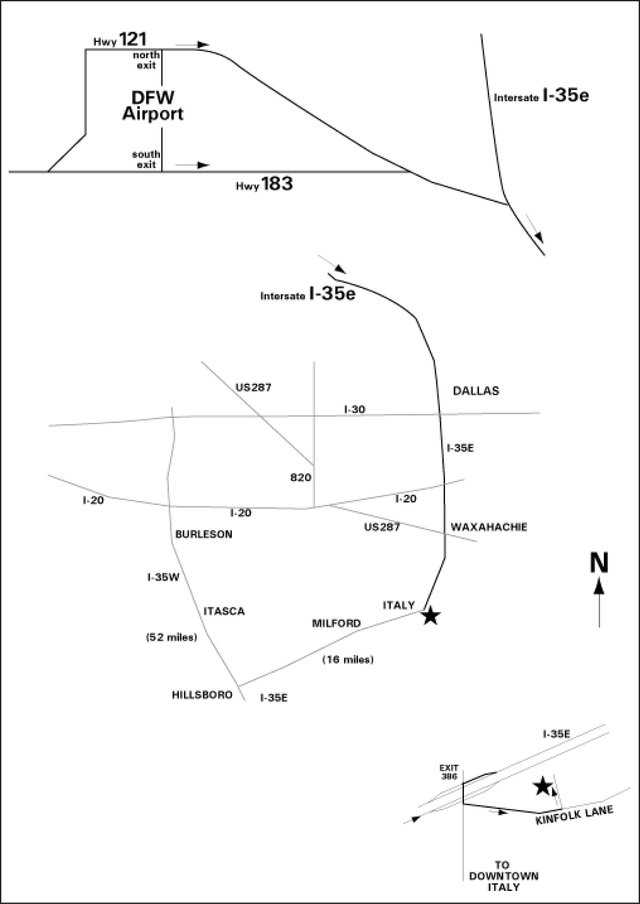
For the convenience of our visitors and workshop attendees we have compiled travel and lodging information to the Monolithic campus from the DFW Airport.
During the workshop you will have the opportunity to participate in the dome construction process, which includes foaming, hanging rebar and spraying concrete. Gary Clark is the Monolithic Representative responsible for this portion of your training. If you plan on participating in these hands-on classes, we require you to bring some safety equipment.

See a map along with directions from DFW Airport.

On many Missouri maps, Niangua’s total area of 0.4 square miles barely merits a pinpoint. Located about 34 miles north of Springfield in Webster County, Niangua is definitely a small town. Less than 500 people live there, and of those less than 230 attend either the elementary or high school. But despite its size, the Niangua school district successfully won a FEMA competition that netted a FEMA grant to cover 90% of the cost of a Monolithic Dome disaster shelter.

Once the 2000 residents of Italy, Texas, where Monolithic is headquartered, passed a $2 million bond for a Multipurpose Center, administrators began researching popular construction of school facilities. Superintendent Mike Clifton said, “Of course we were all familiar with the domes. We had a good overview. But we really had to see for ourselves, so we visited Thousand Oaks — a dome already operating — and we came away convinced.”

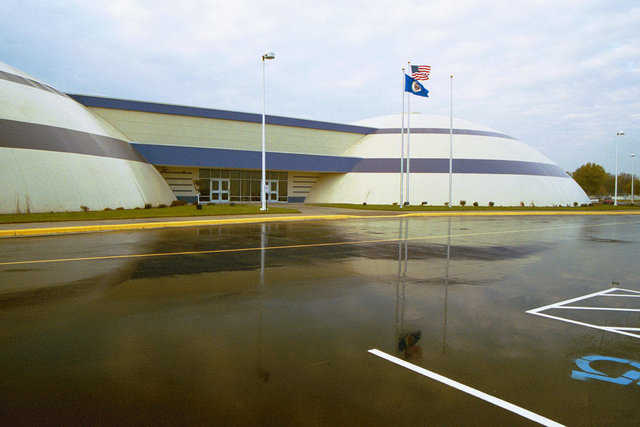
It’s not often that a school district gets plan approval and a grant from its state legislature for twice the money the school district asks for. But Grand Meadow, Minnesota ISD #495 did! On September 15, 1998 Grand Meadow voters passed a bond for $8 million for a much needed Kindergarten through Grade 12 facility. For its 400 students and 30 teachers, Grand Meadow’s approved plan calls for five Monolithic Domes.

After rejecting four bond issues in five years, in 2000, the 165 residents of Caledonia, Missouri overwhelmingly approved one. That approval happened because School Superintendent Larry Graves and Elementary Principal Steve Yount launched an intensive, persistent campaign aimed at educating their community about Monolithic Domes.

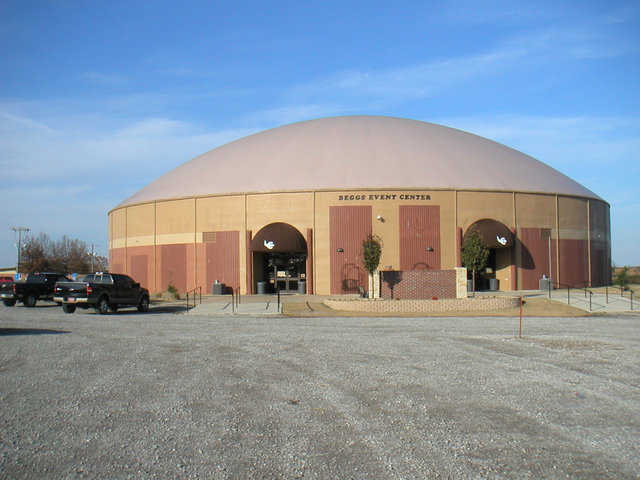
After receiving a Monolithic Dome School packet via snail mail, Marsha Norman, Superintendent of Beggs ISD in Beggs, Oklahoma gathered a few school board members and Architect Michael McCoy and headed to Italy, Texas to discuss building options with David South and tour nearby Monolithic Dome gymnasiums and homes.

Ward Huffman gave a speech at a Monolithic Dome Conference about energy. He talked about sustainable development and also gave a cost analysis. Most importantly, he enumerated the huge savings available by using the Monolithic technology. Dr. Ward Huffman was, at the time, an evaluator with the Department of Energy. The images to the left of this page are reproductions of Dr. Huffman’s Curriculum Vitae (CV). Not only are the savings large but Dr. Huffman points out other benefits – life span and sustainability.

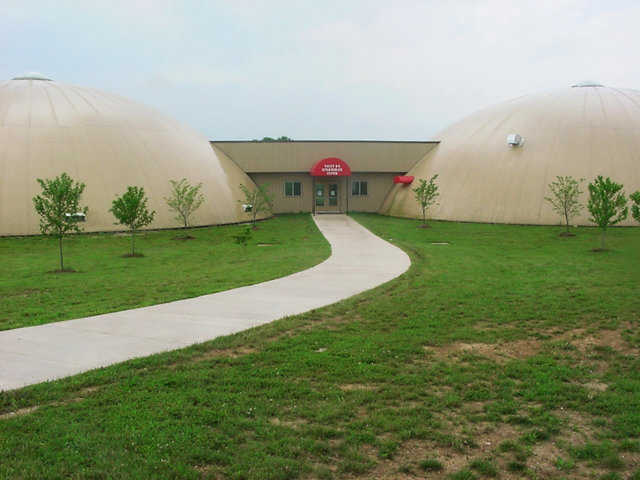
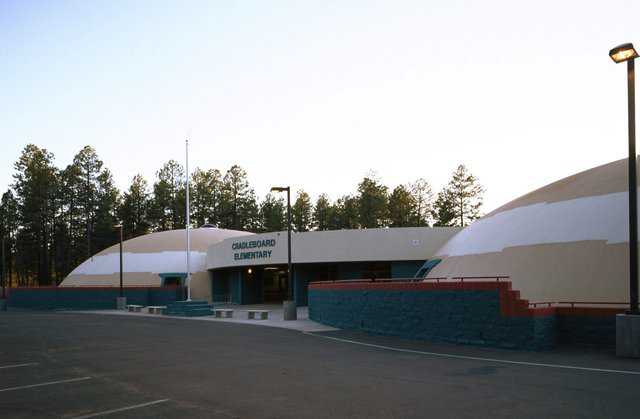
Cradleboard Elementary in Whiteriver, Arizona is on an Apache Reservation, at 7000 feet in Arizona’s high country. In 1998, the community completed three Monolithic Domes with an interconnecting central corridor. Nestled among the Ponderosa Pines, this 34,000-square-foot facility has a multipurpose dome with a cafeteria, gymnasium, and an arts/music area. It’s flanked by two domes with classrooms for 300 students and 13 teachers in kindergarten through grade five.

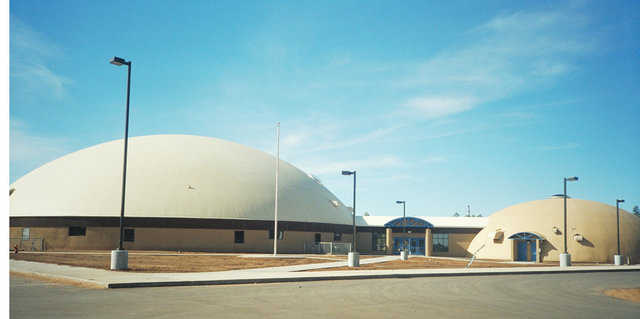
Heber and Overgaard, two towns with a contingent boundary and a combined population of less than 2000, joined forces, creating one school district serving both their communities and the surrounding area. In January 1999, Heber-Overgaard opened their new school campus with its two Monolithic Domes, connected by a corridor with an inviting foyer accessing both domes.

The Emmett High School class of 1987, celebrating their ten-year class reunion this summer, will tell you that their final years of school were, to put it mildly, very uncomfortable. A necessary change came to Emmett in the form of Monolithic Domes.
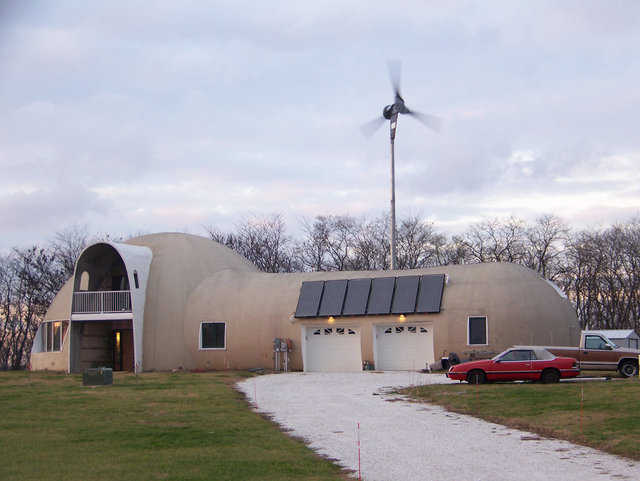
For several decades now our federal and many state governments have been singing the praises of alternative or renewable energy systems. They want us to go to a photovoltaic, solar thermal or wind system for our electricity, instead of our local energy supplier. If, during the day, our Monolithic Dome generates the energy we need plus extra that we sell back and only buy at night, we could have a zero-cost home. That’s a practical, reasonable goal, and chances of obtaining it are far better with a high performance Monolithic Dome simply because the dome, by its very nature, uses so much less energy.

Most of us have experienced it at least once — that wonderful feeling when something we’ve planned for a long time finally comes true. In March 2008, Sharon and Terry Smith enjoyed such a euphoria when they moved into Palo Pinto, their new Monolithic Dome home.

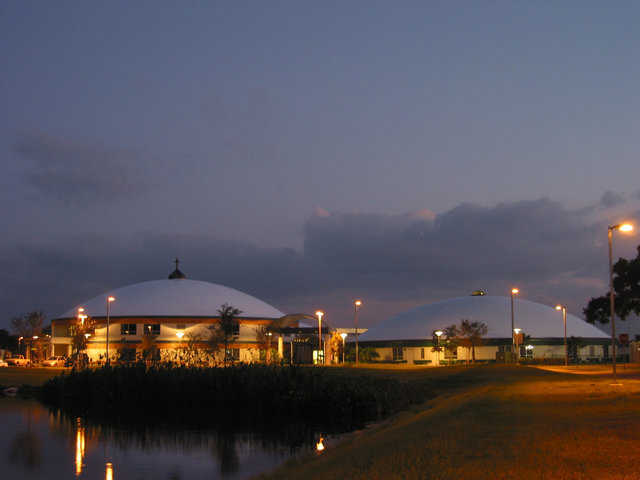
In the morning sunshine, approximately 500 students scrambled into the four new Monolithic Domes of Bishop Nevins Academy, a Catholic school in the Diocese of Venice in Sarasota, Florida. Most had seen the domes and even walked through them before. Nevertheless, excited shouts and ohs and ahs of wonder permeated the air. It was the first day of school — a school of unique round buildings.

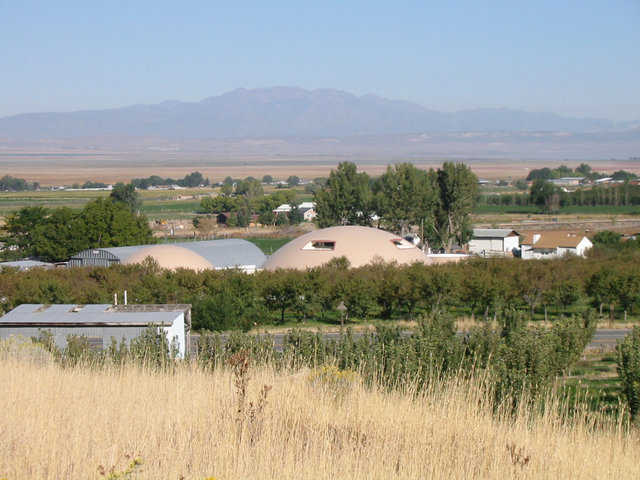
Soft is not a word usually associated with concrete. Yet, soft, round and homey were just what administrators at Centro de la Familia de Utah, the coordinating agency for Utah’s Migrant Head Start Program, saw in Monolithic Domes, as they reviewed possible school designs for their new facility in Genola, Utah.
One South Texas school district is taking steps to protect its students from one of nature’s most dangerous forces. Woodsboro Independent School District is planning to build a Monolithic Dome gym. The dome, which is expected to cost between $2.1 million and $2.4 million, will seat more than 900 people.

“We’re so big it takes two states to hold us!” So says the town of Texhoma. Now Texhoma has a new, pride worthy accomplishment: a beautiful Monolithic Dome facility for its 426 students, in grades five through 12. The campus features two Monolithic Domes, 108 feet and 66 feet in diameter, connected with conventional construction.
This is a video featuring the project by Domes for the World in New Ngelepen, Indonesia. The New Ngelepen project included 77 houses, 6 MCK’s (bathroom, shower facilities), 6 wells, 6 septic systems, a church, and roads.
Click below to watch our Introduction to the Monolithic Dome Homes video.

“All great projects start with a spouse!” That was Robin Miller’s reply when asked how and why he got interested in a Monolithic Dome home. He went on to explain that Kati, his wife, had lived in several coastal states but never in the middle of the country until they married and moved to Illinois. When Kati realized that tornadoes occur in Illinois, she insisted on building a disaster-resistant home. So the Millers began researching and found Monolithic Domes.

David South gave a presentation at the Fabric Formwork Conference in Winnipeg, Canada in May of 2008. Among other things, he talked about how we use airforms to build Monolithic Domes.

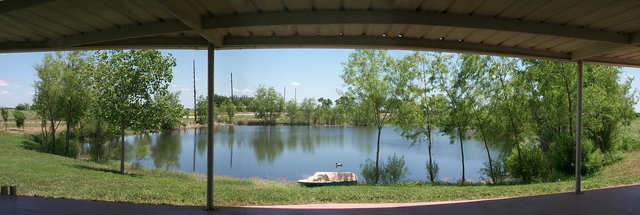
Choosing a proper site for a Monolithic Dome is both simple and complex. Obviously, the easiest place to build is on a nice flat piece of land with good drainage, but a Monolithic Dome is so versatile it can be constructed on a limitless number of sites. You can put it on a mountainside, a valley or even over water. No matter where you build, be sure to take advantage of your property and sight lines.

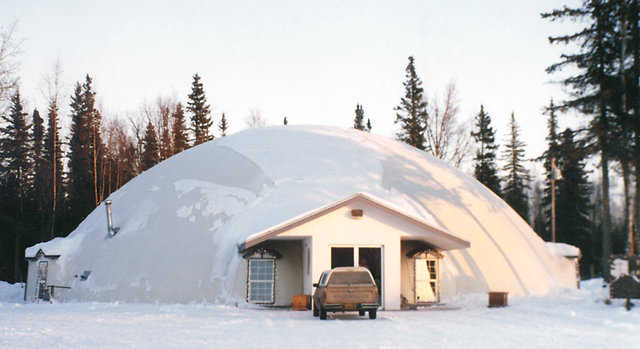
The number one advantage to building a Monolithic Dome in Alaska is a shaky one — earthquakes! “Alaska is in the highest earthquake zone,” Ansel said. “We have at least one, somewhere in Alaska — very often.” (Officially, Alaska averages 80 earthquakes a month.) “Monolithic Domes successfully survive those shakers.”

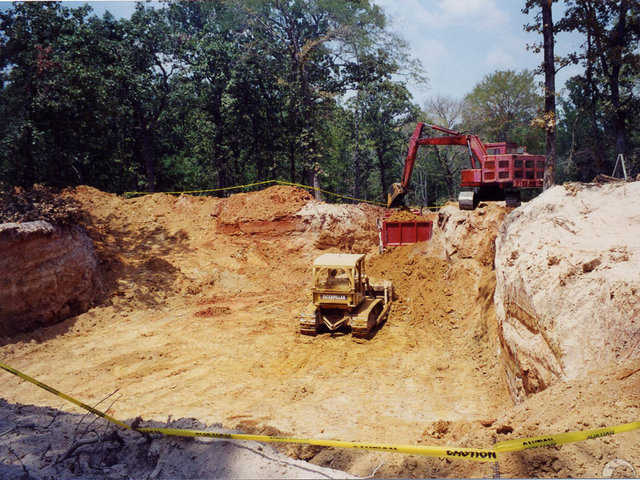
Has the idea of living in an underground home tempted you? If so, you’re part of a growing minority. More and more people, worldwide, have already or plan to build an earth-sheltered or earth-bermed home.
The initial cost of a Monolithic Dome is usually the same as a custom-built, conventional home of equal interior finish. If you planned on buying a $100,000 house, you will probably have to pay $100,000 for your dome home. However, the long-term, day-to-day costs of a Monolithic Dome will always be lower. And the true cost of owning a dome home is substantially less.
Two of my nieces made a video about Monolithic Domes while they were on Christmas Break. They really did an awesome job. Check it out.

Church Solutions Magazine is one of the publications that pastors and administrators turn to when they are looking for information that pertains to running a medium-sized or large church. The magazine’s web site features information on everything from church marketing to fundraising during a recession.
Can a Monolithic Dome cure chemical sensitivity? No. But it can certainly help people who have it.

The night after our home addition was inflated, some of the neighbors thought a UFO had landed. A soft orange glow radiated from the elliptical bubble. It almost seemed alive. Sound like something from a science fiction movie? The foam and concrete dome has something to do with science, but there’s nothing fictional about it.

We have finally come to a breathing place, and can write of our “Birthing” of the dome. We finished the dome interior in six weeks! All cabinet work, floor coverings, sheet rock, and appliances are in and done. By doing the electrical, plumbing, and carpentry, I was able to save a great deal of money as well as frustration. We are moved in and have been living in the dome for the past four weeks.

Sviet Raikov, a native Russian, who attended a Monolithic Dome Workshop in 1994 and returned to Moscow with one of our Training Paks, reports the completion of a 36’ X 18’ dome home — the first of its kind in Russia!

Although they have toured nine domes, the Siglers would have liked to have experienced life in a dome before making the major investment of actually building one. Seeing the Eye of the Storm on Sullivan’s Island was the decision maker. “That home was proof that domes could be built beautifully,” said Valerie Sigler.

If you said Joe Gora is a man who loves his dome home, you would be right. After completing two Monolithic Dome Workshops, Joe designed and built Free Will, a 42′ × 18′ dome with 1585 square feet of living space, on a double lot in Marietta, Georgia. That process took 18 months and culminated with Joe celebrating Christmas 2000 in his new dome. Since then, his delight with Free Will has not waned an iota.

On a sunny morning in 1991, at a home site on Sullivans Island, South Carolina, George Paul, designer and builder of dome structures, anxiously watched an Airform inflating. Paul had watched many such inflations before — but never with this much anxiety.

In 1999, Kim and Robert Reynolds designed and built a Monolithic Dome dream-home, a 5/8th sphere with a diameter of 50 feet, a height of nearly 29 feet, two stories and 3500 square feet of living space. Shaded by more than 80 live oaks, the dome sits on five wooded acres among gently rolling hills, seven miles northwest of Bandera, Texas.

At times it is appropriate to clean the Airform, before or after the building is completed. This may be necessary because of dirt accumulated during shipping or construction, or from our not-so-clean environment.